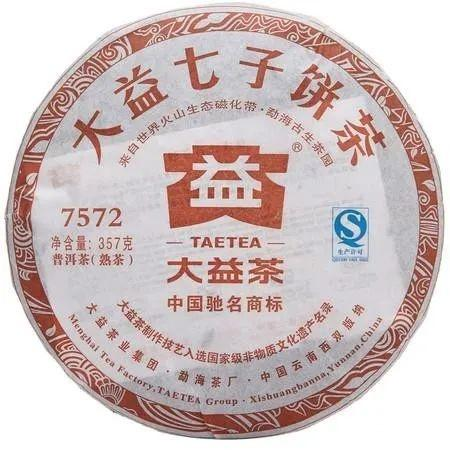
On the packaging surface of Pu’er Tea tea, a group of four numbers often appear, which has a professional name, called “tut” or “head”. This word comes from the Cantonese dialect, “Tut” is the Cantonese translation of the English word “mark”. In Cantonese dialect, “mark” is actually the meaning of brand or trademark. In the tea trade, it refers to the name of tea expressed by numbers or numbers supplemented by words. It is also called “tea coding”.
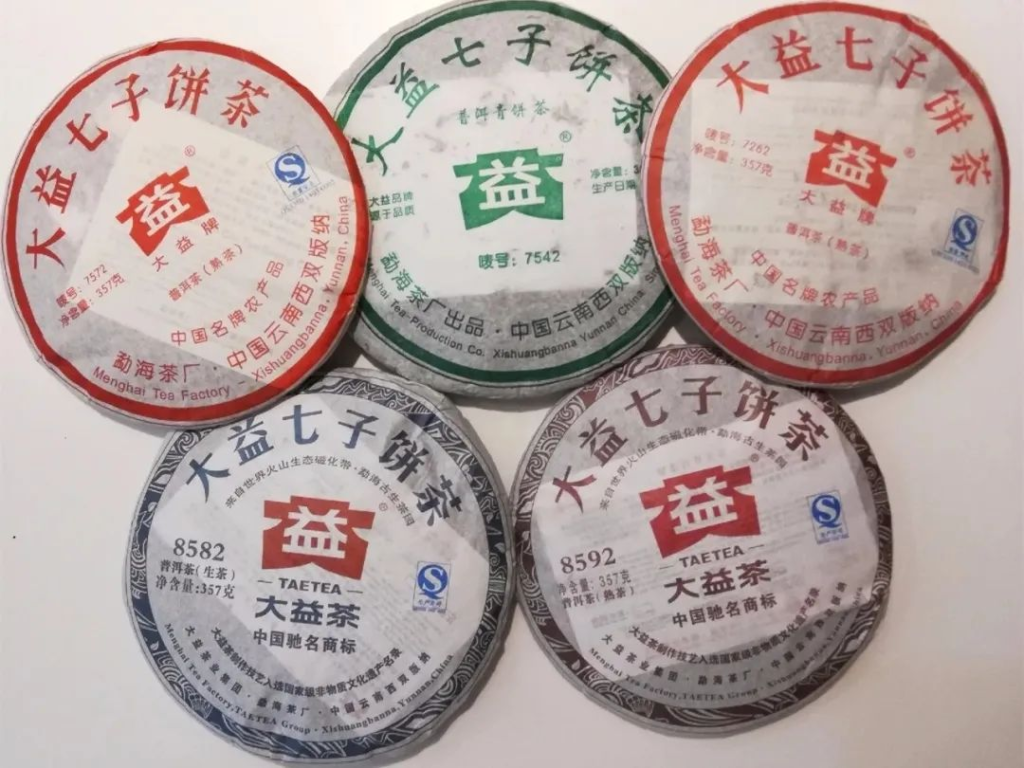
1976Because of the need of export, Yunnan Tea Company began to standardize the Pu’er Tea of tea marks. They chose to use four digits to explain the content of Pu’er tea. For pressed cake tea, the four-digit number follows specific rules:
- The first two digits are the year of invention (or the beginning of adoption) of the tea
- The third digit is the grade of raw tea materials (from 0 to 9, indicating the grade of raw tea leaves, 0 is the most tender, 9 is the oldest),
- The fourth digit is the number of tea factories (1 is Kunming Tea Factory, 2 is Menghai Tea Factory, 3 is Xiaguan Tea Factory, 4 is Pu’er Tea Tea Factory).
If it is loose tea, it is also exclusive. Male, it’s a five-digit number. The rules of numbering are somewhat similar to those of cakes and tea.
- The first two digits indicate the year of production of the tea
- The third and fourth digits indicate the grade of raw tea materials
- The fifth digit indicates the manufacturer of the tea.
In addition, if Pu’er Tea cake tea is pressed by iron mould, it also has its own mark number, usually with a capital letter “T”, placed in front of the four numbers of Pu’er Tea tea cake tea, indicating that the rules of discus exclusive compilation are the same as those of cake tea, such as T8633, T8673, etc.
The seven-digit Pu’er Tea tea mark number, the following three digits are the batch number
- The first digit indicates the year of production, which is repeated every ten years
- The last two digits indicate the number of batches of tea.